Description
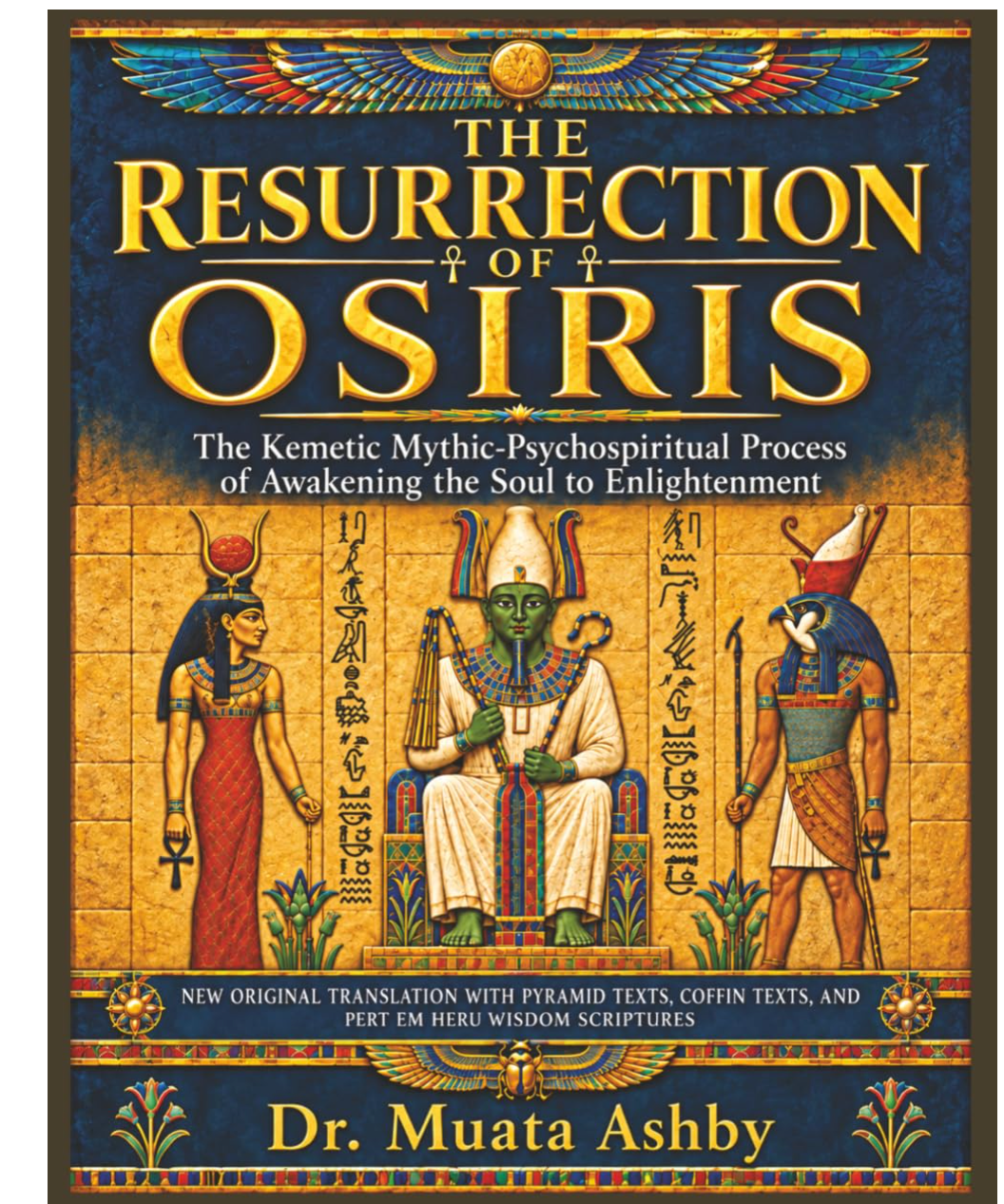
THE RESURRECTION OF OSIRIS
The Kemetic Mythic-Psychospiritual Process of Awakening the Soul to Enlightenment
The Resurrection of Osiris is more than the story of a god who dies and returns to life. In the Ancient Egyptian mysteries, the sacred drama of Asar (Osiris), Aset (Isis), Heru (Horus), Set, and Djehuty (Thoth) presents a profound teaching concerning the human Soul, the fragmentation of conscious-awareness through egoism and ignorance, and the process by which spiritual vision, right understanding, remembrance, and enlightened awareness may be restored.
In this substantially revised and expanded work, Dr. Muata Ashby brings together the Osirian resurrection tradition from the Stele of Amenmose, Pyramid Texts, Coffin Texts, Pert em Heru (Egyptian Book of the Dead/Book of Coming Forth by Light), Metternich Stele, Chester Beatty Contendings of Heru and Set, and the temple traditions of Abydos and Edfu. Original hieroglyphic passages are presented through Dr. Ashby’s Trilinear Translation Method, combining transliteration, direct translation, and contextual interpretation.
The book unfolds as two interrelated studies within one volume. The first reconstructs the mythic drama of the death and restoration of Asar, the wisdom and devotion of Aset, the birth and development of Heru, and the struggle against Set. The second penetrates beneath the narrative to uncover the ritual, psychological, philosophical, and mystical teachings embedded within the myth.
Through this Kemetic mythic-psychospiritual approach, the gods and goddesses are understood not only as sacred divine personalities but also as principles operating within human conscious-awareness. Set represents egoistic fragmentation, agitation, fear, rage, and the tendency of the lower personality to usurp spiritual sovereignty. Heru represents righteous aspiration, courage, restoration, protection, and the developing capacity to redeem the Soul. Djehuty represents purified and discriminating intellect, while the restored Eye of Heru symbolizes higher intuitional vision.
The ancient texts reveal a coherent process: vision is fragmented, the Eye is restored, the heart-mind is clarified, remembrance returns, and the aspirant recovers awareness of the deeper nature of Self. Coffin Text Spell 62 joins Heru, Djehuty, the heart, the Shining Spirit, and the command to “remember what you have forgotten.” Other Pyramid and Coffin Text passages connect Asar with Tem/Atum, the All-Complete, revealing that resurrection is not the creation of a new spiritual essence but the recovery of awareness of a wholeness that was never truly destroyed.
The teaching culminates in HETEP—peace, satisfaction, reconciliation, and the resolution of apparent opposites—and in the initiatic mystery of Asar meeting Asar: the individual soul encountering and recognizing its identity with the Universal Soul.
The central insight of this work may be stated simply:
The Witness was never fragmented; vision was fragmented. Resurrection restores wholeness of vision, not wholeness of essence.
The final victory of Heru is therefore Asar recovering himself.
For students of Ancient Egyptian religion, philosophy, mysticism, hieroglyphic scripture, consciousness, and spiritual psychology, The Resurrection of Osiris presents the Osirian mystery as a living pathway from fragmentation and forgetfulness to remembrance, spiritual sovereignty, and Nehast—Enlightenment.